
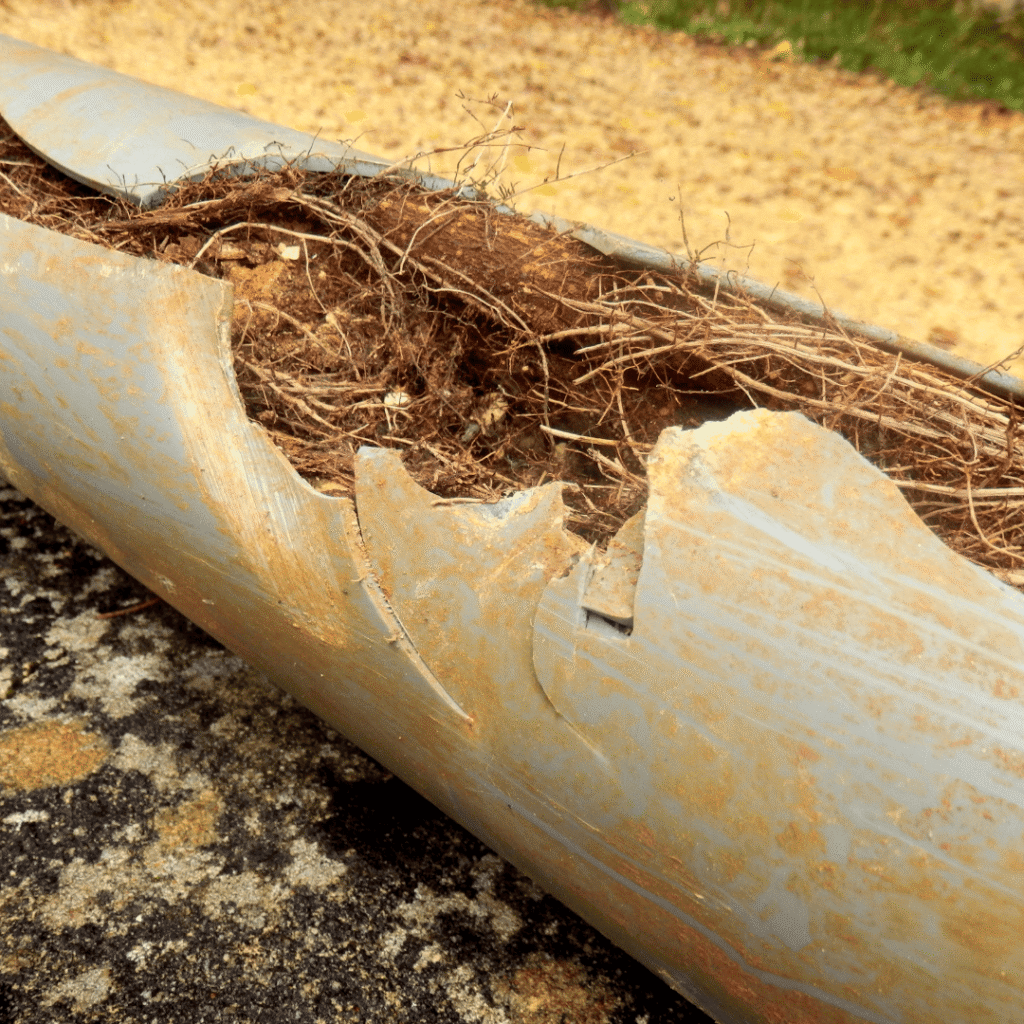
After 25 years of working on homes in and around Thornton, I can tell you the sewer call that stings the most is the one that could have been avoided. A homeowner has a backup in the basement, a flooded floor drain, a mess nobody wants to think about. We run a camera down the line and find a mass of roots that had been growing there for years. Quietly. Slowly. Until one day it wasn’t slow anymore.
If you have mature trees in your yard, this is worth understanding. And right now, with fall here, it’s a good time to act on it.
How Roots End Up Inside Your Pipe
Tree roots don’t bust through a healthy sewer line. That’s a common myth. What they do is much sneakier.
Your sewer line carries warm, moist waste and water, and some of that moisture seeps out through tiny weak points in the pipe. Roots can sense it. Hair-thin root fibers follow that moisture to a hairline crack, a loose joint, or a worn seal, and they slip inside. Older pipes are especially open to this, including clay, cast iron, and Orangeburg, which was a popular material decades ago and doesn’t hold up well over time.
Once a root gets in, it has everything it needs: water, nutrients, and room to grow. It thickens. It branches. It starts pressing outward on the walls of the pipe, which widens the original crack and gives the next root an easier way in.
Then comes the part homeowners notice. That growing root mass acts like a net. Toilet paper, grease, and other waste catch on it, and the blockage builds. You might see slow drains, gurgling toilets, or a backup that no amount of snaking seems to fix for long. Snaking can clear the clog, but if the roots are still there, they grow back.
Why Fall Is a Smart Time to Look
I’m not going to tell you roots only cause trouble in one season. They don’t. But fall happens to be a very good window for an inspection, for a few practical reasons.
By late summer and early fall, the surface soil around Thornton tends to be dry. Trees go looking for water deeper down, and your sewer line is often the most reliable source in the neighborhood. So root activity around pipes can be high right when the weather starts to turn.
Timing matters even more because of what’s coming. Colorado winters mean freeze and thaw cycles, and ground that swells and shifts. A pipe that’s already cracked or packed with roots has a much harder time handling that stress. A small intrusion in October can turn into a collapsed or fully blocked line in January, and nobody wants to hire an excavation crew in the middle of winter if they can help it.
An inspection now lets us find a minor problem while it’s still minor. We can clear the roots, assess the pipe, and talk through your options before the ground freezes and before heavy snowmelt puts extra pressure on everything underground.
What a Camera Inspection Looks Like
Years ago, finding a sewer problem meant digging up the yard and hoping you guessed right. That’s not how we do it anymore.
We feed a small, waterproof camera into your sewer line, and it sends back clear video of what’s going on inside. We can see roots, cracks, sagging sections, and buildup. With experience, we can also pinpoint where the trouble is, which saves you from tearing up more of your yard than necessary.
Here’s the part I care about most. We show you the footage. You see exactly what we see, and then we put together a detailed quote for the work that’s needed. No guessing, no vague explanations. If the damage is isolated, a targeted repair is often the right call. If the pipe is extensively damaged or very old, replacement may be the better investment, and we’ll explain why. You get the options, and you make the decision.
Signs You Shouldn’t Ignore
Your sewer line usually gives a few warnings before it fails. Pay attention if you notice:
- Drains that clear slowly, especially more than one at a time
- Toilets that gurgle or don’t flush the way they used to
- Sewage smells in the yard or near drains
- Wet, soggy, or unusually green patches in the lawn
- A backup that returns after being cleared
Any one of these can have a simple explanation. Several together, or one that keeps coming back, is a good reason to have the line looked at.
Frequently Asked Questions
How do I know if tree roots are the cause of my sewer problem?
The symptoms can look a lot like a regular clog, which is why a camera inspection is the most reliable way to know. Slow drains, gurgling, and repeat backups point toward a line problem, but only a look inside the pipe will confirm whether roots are involved and how far the damage goes.
Will cutting down the tree solve the problem?
Not always. Roots that are already in the pipe can keep growing even after a tree is removed, and the damage they’ve done to the pipe doesn’t undo itself. Removal may be worth considering in some cases, but the line should be inspected first so you know what you’re actually dealing with.
Can roots be cleared without replacing the whole sewer line?
Often, yes. If the pipe is still in reasonably good shape, clearing the roots and making a targeted repair can solve the problem. If the camera shows widespread cracking, collapsed sections, or a pipe material that’s failing, replacement usually makes more financial sense over time. We’ll tell you which situation you’re in.
How often should a residential sewer line be inspected?
There’s no single schedule for every home. If you have large trees near your line, an older home, or a history of clogs, an annual or every-other-year camera inspection is a reasonable habit. Newer homes with few trees nearby can usually go longer.
What does a sewer line camera inspection cost?
It depends on the home and the situation, so I’d rather not throw out a number that doesn’t fit. Give us a call and we’ll explain what’s involved and what to expect. If repairs are needed after the inspection, you’ll get a clear, detailed quote before any work begins.
Does a sewer backup mean I need emergency service right away?
A sewage backup is a time-sensitive problem, and it’s worth calling a licensed plumber quickly. Stop using water in the home if you can, since every flush and every load of laundry sends more waste into a line that has nowhere to go.
Let’s Take a Look Before Winter
If you’ve got mature trees, an older home, or drains that have been acting up, I’d rather you find out now than at 11 p.m. in January. Our licensed plumbers will inspect your line, show you what’s happening, and walk you through the options in plain language.
Call Royal Services Plumbing, Heating & Air at (720) 740-0909 to schedule your sewer line camera inspection in Thornton, CO before winter sets in.